
Publications
Predicting Cardiovascular Drift from 3D Running Pose via Spatio-Temporal Graph Attention
Under review
A spatio-temporal graph-attention model that infers cardiovascular drift directly from monocular 3D running pose, linking biomechanics to cardiovascular load without wearable instrumentation.
Invertible Query-Key Coupling Composes with Attention Mechanisms
Under review
An invertible, identity-initialized coupling that jointly transforms each token's query and key before attention scoring, composing with existing attention variants rather than replacing them.
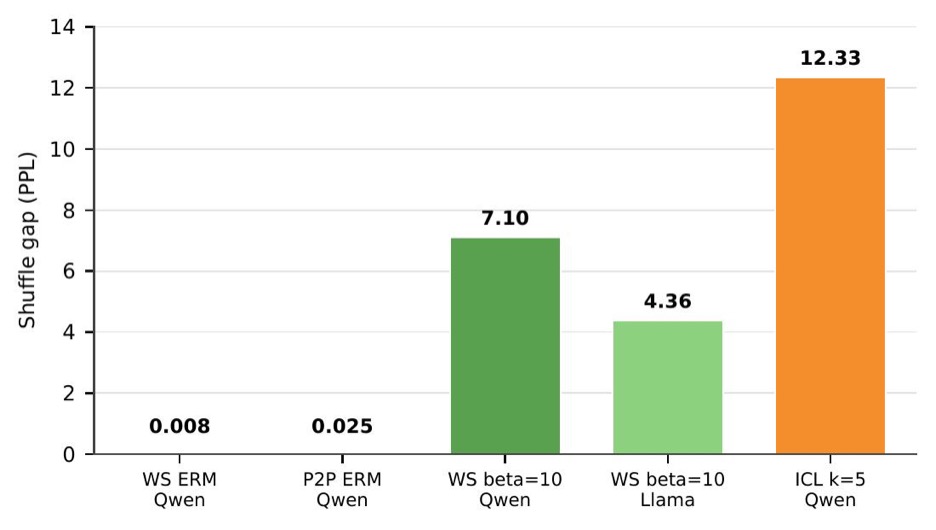
The Shuffle Gap: Diagnosing Personalization Collapse in LLMs
Preprint (under review)
A support-sensitivity audit showing that large personalization perplexity gains can coexist with near-zero dependence on the matched user's support.
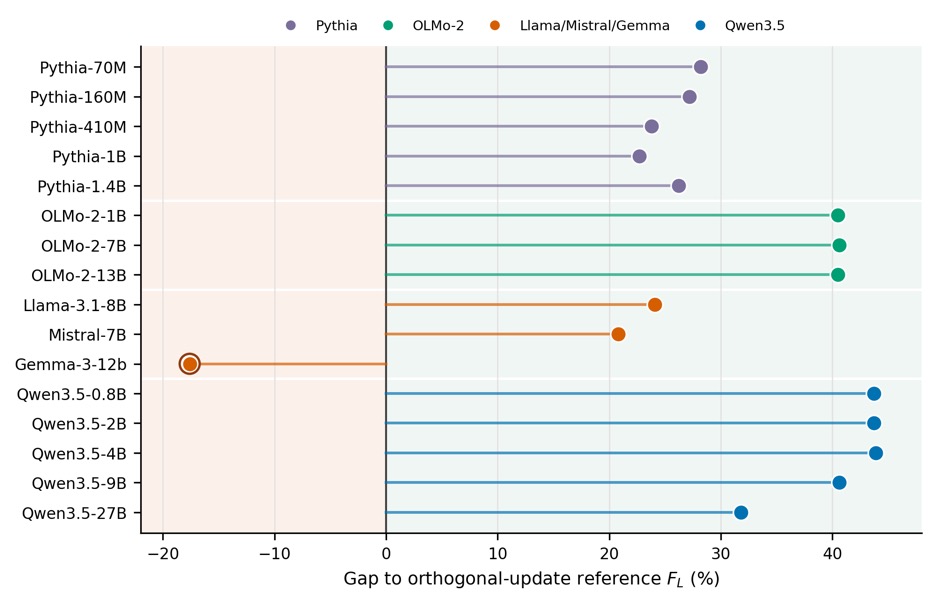
Effective Residual-Stream Depth of Language Models
Preprint (under review)
A residual-stream diagnostic for measuring how many statistically distinguishable representation states decoder-only language models traverse.
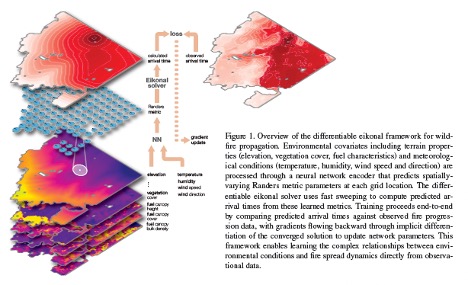
Differentiable Randers-Finsler Eikonal Solvers
Computer Graphics Forum (Proceedings of SGP 2026)
Differentiable Randers-Finsler Eikonal solver for GPU-accelerated wildfire spread simulation with learnable anisotropic metrics.
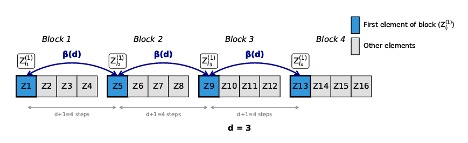
Matched Effective Sample Size for Temporal Evaluation with Conservative TCN Bounds
Preprint (under review)
Temporal dependence makes raw sequence length a poor proxy for statistical information, yet temporal deep-learning benchmarks often compare regimes at fixed raw $N$. We propose a dependence-aware evaluation protocol that matches an operational effective sample size $N_{\text{eff}}$: estimate integrated autocorrelation time, allocate raw lengths to a common information budget, verify achieved $N_{\text{eff}}$, and report fixed-$N$ and matched-$N_{\text{eff}}$ views. In a 640-run controlled AR(1) sweep, stronger dependence does not necessarily increase signed or absolute train--test gaps once comparisons control for $N_{\text{eff}}$; the apparent ordering can change under fixed-$N$ evaluation. IPS-matched AR(2) and Beijing PM2.5 diagnostics show the same matching mechanics without an oracle AR(1) formula. We complement the protocol with a conservative TCN baseline for exponentially $\beta$-mixing sequences by combining standard blocking/coupling with existing convolutional norm bounds. This guarantee controls population risk against anchor empirical risk, not the full train--test gap, and serves as a worst-case reference for dependence and architecture scaling.
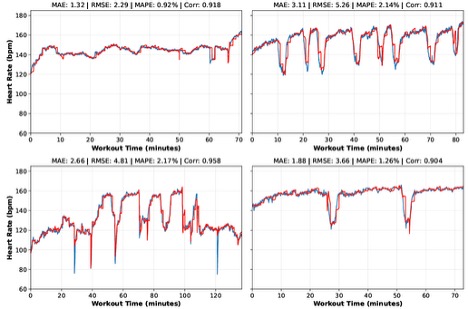
From Lab to Wrist: Bridging Metabolic Monitoring and Consumer Wearables for Heart Rate and Oxygen Consumption Modeling
27th ACM International Conference on Multimodal Interaction (ICMI 2025)
First framework predicting instantaneous VO2 from consumer wearables, using a physiologically constrained ODE and neural Kalman filter.
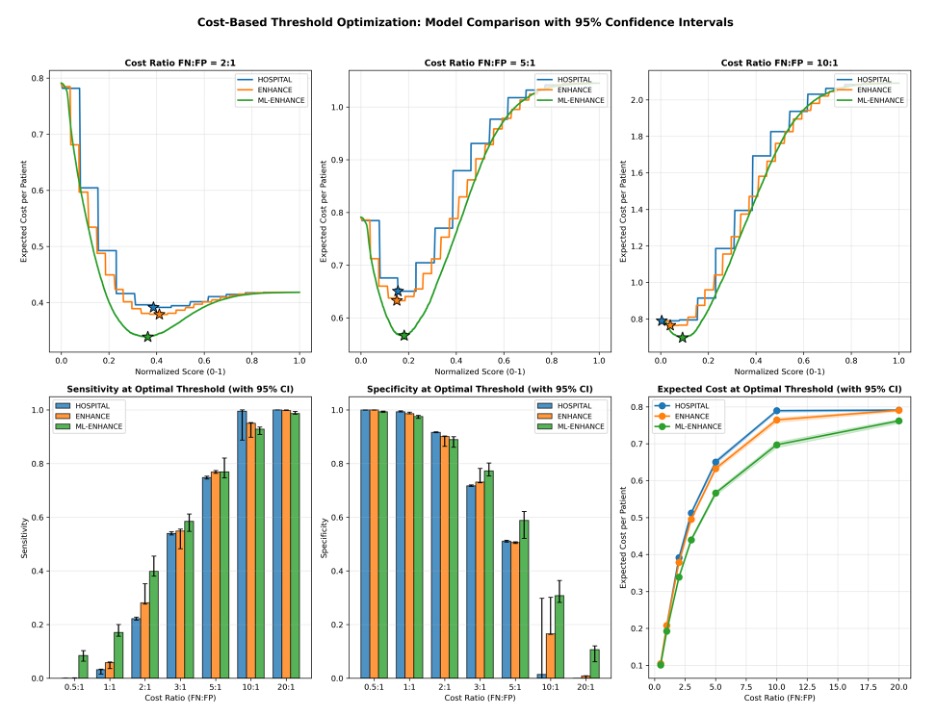
ML-ENHANCE: A Machine Learning Framework for Hospital Readmission Prediction with Cost-Optimized Decision Thresholds
Preprint (under review)
Decision-theoretic ML ensemble for 30-day readmission prediction, outperforming HOSPITAL and clinical scores with AUC 0.752 on 113K admissions.
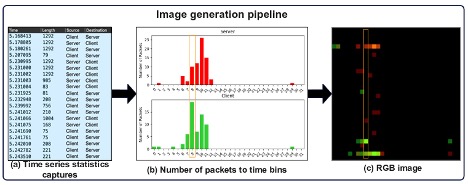
Exploring QUIC Dynamics: A Large-Scale Dataset for Encrypted Traffic Analysis
IEEE Mediterranean Conference on Networks and Communications 2025 (MeditCom)
Public dataset of 100K+ labeled QUIC traces with SSL keys from 40K+ websites, enabling encrypted traffic analysis.
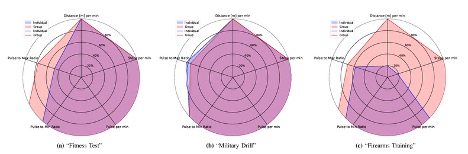
WearableMil: An End-to-End Framework for Military Activity Recognition and Performance Monitoring
13th International Conference on Healthcare Informatics (ICHI) , 2025
End-to-end framework for military activity recognition from smartwatch data, achieving 93.8% accuracy across 135 soldiers.
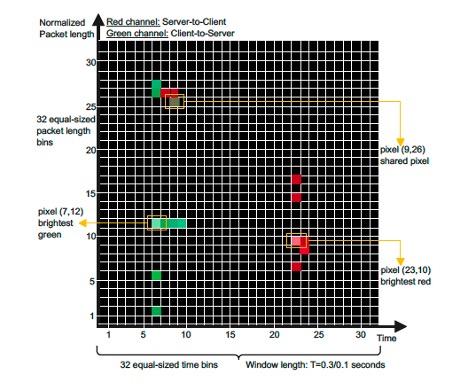
Estimating the Number of HTTP/3 Responses in QUIC Using Deep Learning
IEEE International Conference on Machine Learning for Communication and Networking (ICMLCN) , 2025
Deep learning method to estimate HTTP/3 response counts from encrypted QUIC traffic, achieving 97% accuracy on 7M+ images.
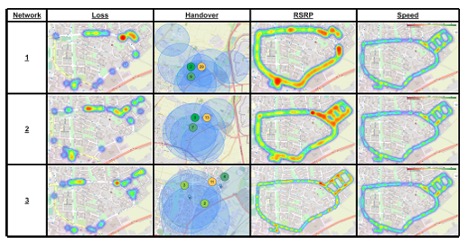
Data-Driven Cellular Network Selector for Vehicle Teleoperations
15th International Conference on Network of the Future (NoF) , 2024
ML-based cellular network selector that dynamically routes video packets for autonomous vehicle teleoperation, reducing packet loss and latency.
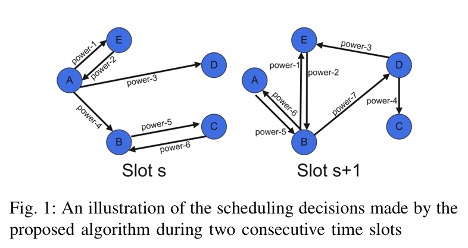
Using Deep Reinforcement Learning for mmWave Real-Time Scheduling
14th International Conference on Network of the Future (NoF) , 2023
Model-free deep RL algorithm for real-time link scheduling in 5G mmWave mesh networks, meeting strict time constraints.